
When Closeness Starts to Feel Like Pressure
Avoidant attachment style doesn’t always look obvious.
In the beginning, everything feels easy — calm, independent, even refreshing. There’s no emotional chaos, no constant need for reassurance.
But something subtle happens when the connection deepens.
Conversations start to feel heavier. Expectations feel closer. And without fully realizing why, you begin to step back.
Not because you don’t care —
but because closeness starts to feel uncomfortable.
What Is Avoidant Attachment Style?
Avoidant attachment style is a pattern where emotional independence feels safer than emotional closeness.
It’s not about avoiding people — it’s about avoiding the vulnerability that comes with being deeply known.
On the surface, it can look like strength:
- self-reliance
- emotional control
- independence
But underneath, there’s often a quiet resistance to depending on someone… or letting someone depend on you.
7 Signs of Avoidant Attachment Style in Relationships:
1. You Feel Fine — Until Things Get Serious
You enjoy connection, but once emotions deepen, something inside pulls back.
2. You Need Space More Than Most
Too much closeness feels draining rather than comforting.
3. You Keep Emotions to Yourself
Even when you feel something deeply, expressing it doesn’t come naturally.
4. You Value Independence Strongly
Relying on others feels uncomfortable, even when support is available.
5. You Mentally Distance During Conflict
Instead of engaging, you shut down or detach.
6. You Feel Pressured by Expectations
Commitment or emotional expectations can feel overwhelming.
7. You Leave Before Feeling Too Vulnerable
Sometimes, creating distance feels easier than staying emotionally exposed.
How to Know If You have Attachment Avoidant style (Self-Check Quiz)?
Sometimes, avoidant attachment style is not obvious — especially because it can feel like independence rather than distance.
You may not fully notice it until you reflect on your patterns.
Ask yourself:
- Do I feel uncomfortable when someone gets emotionally close to me?
- Do I pull away when relationships start becoming serious?
- Do I prefer handling things alone instead of relying on others?
- Do I struggle to express my emotions openly?
- Do I feel drained after too much emotional interaction?
If you find yourself saying “yes” to most of these, you may be experiencing patterns related to avoidant attachment style.
Awareness is not about labeling yourself — it’s about understanding how you respond to connection.
Why This Pattern Develops?
Avoidant attachment style often forms early — not from a lack of care, but from a lack of emotional responsiveness.
When vulnerability isn’t consistently met with understanding, the mind adapts:
Over time, independence becomes not just a preference — but protection.
How It Quietly Shapes Relationships?
This pattern doesn’t always create obvious conflict.
Instead, it creates distance that is hard to explain.
Partners may feel:
- emotionally shut out
- unsure where they stand
- disconnected despite being present
And you may feel:
- overwhelmed by closeness
- misunderstood
- more comfortable alone than emotionally engaged
The Push-Pull Dynamic:
Avoidant attachment style often pairs with partners who seek closeness.
This creates a cycle:
- the more someone moves closer
- the more you feel the need to step back
Not intentionally — but almost automatically.
This dynamic can feel stable at first, but eventually becomes emotionally tiring for both.
If you want to better understand the emotional side of this push-pull dynamic, you can also read: 7 Signs of Anxious Attachment Style: Causes, and How It Affects Relationships
Common Misconceptions About Avoidant Attachment Style:
Avoidant attachment style is often misunderstood.
Many people assume avoidant individuals:
- do not care about relationships
- lack emotions
- intentionally hurt others
- avoid commitment because they never loved deeply
In reality, avoidant patterns are usually connected to emotional protection rather than a lack of feeling.
Distance is often a response to overwhelm — not absence of care.
Understanding this does not excuse unhealthy behavior, but it helps explain why emotional withdrawal happens.
What Avoidant Attachment Can Look Like in Real Life:
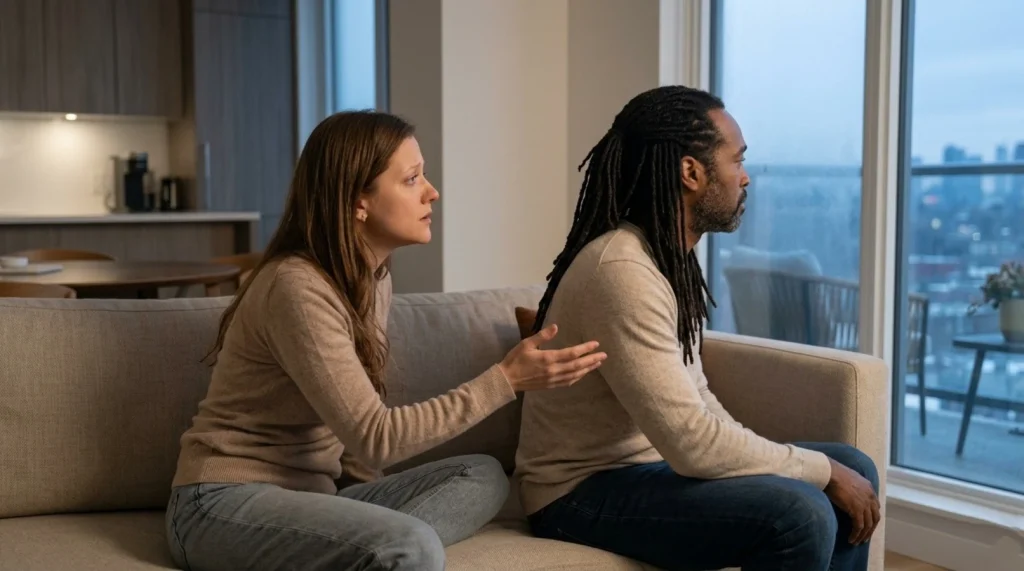
Imagine someone who genuinely enjoys spending time with their partner.
In the beginning, they text consistently, make plans easily, and seem emotionally present.
But as the relationship becomes more serious, subtle changes begin to appear.
Their partner starts wanting deeper conversations, more reassurance, and emotional clarity.
Instead of moving closer, the avoidant person slowly begins creating distance.
They may:
- take longer to reply
- seem emotionally distracted
- avoid serious conversations
- suddenly need “more space”
To the other person, this shift can feel confusing and painful.
It may seem like the feelings disappeared overnight.
But internally, the avoidant person may still care deeply.
What changes is not always the feeling —
it is the emotional pressure they begin to experience as intimacy increases.
Without fully understanding why, closeness starts feeling overwhelming rather than comforting.
That is why avoidant attachment style can create relationships that feel emotionally mixed:
- connection and distance
- care and withdrawal
- closeness and discomfort
all existing at the same time.
This is why avoidant attachment can feel confusing not only for partners — but also for the person experiencing it.
What Triggers Emotional Withdrawal?
Certain moments can activate this response quickly:
- intense emotional conversations
- feeling relied upon too much
- loss of personal space
- expectations of deeper commitment
These situations can create a quiet urge to disconnect — even when the relationship matters.
What Avoidant People Often Feel But Rarely Say?
People with avoidant attachment style are often misunderstood.
From the outside, they may appear distant, emotionally unavailable, or detached.
But internally, the experience is usually more complicated.
Many avoidant individuals still want love and connection — they simply feel overwhelmed when emotional closeness becomes too intense.
At times, they may:
- care deeply but struggle to express it
- need space without wanting to lose the relationship
- pull away emotionally while still thinking constantly about the person
- feel safer hiding emotions than explaining them
This inner conflict can create confusion not only for partners, but also for the avoidant person themselves.
One part desires connection.
Another part instinctively protects distance.
That is why relationships can sometimes feel emotionally exhausting, even when genuine feelings exist underneath.
Can Avoidant Attachment Style Change?
Yes — but not through force.
This pattern shifts through awareness, not pressure.
You don’t need to suddenly become emotionally open.
You just need to become slightly more aware each time you pull away.
That’s where change begins.

How to Start Opening Up (Without Overwhelm)?
1. Notice When You Create Distance
Not to judge — just to understand.
2. Stay a Little Longer in Conversations
Even a small effort to remain present makes a difference.
3. Share Small Things First
Vulnerability doesn’t have to be deep — it just has to begin.
4. Communicate Your Need for Space
Distance feels different when it’s explained, not silent.
5. Let Connection Build Gradually
Closeness doesn’t have to be rushed.
Final Thought:
Avoidant attachment style is not about being distant.
It’s about protecting a part of you that never felt fully safe being seen.
But connection doesn’t require losing yourself.
It simply asks you to stay…
just a little longer than you’re used to.
Sources & References:
- Insights adapted from Psychology Today
- Relationship patterns referenced from Verywell Mind
- Emotional behavior insights supported by Healthline